



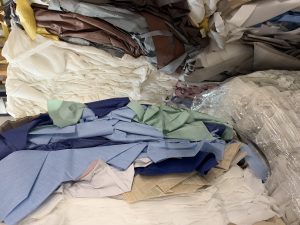
Every metre of technical fabric leaving our lines carries a part that never reaches the building site: the offcut. Selvedges, cutting trims, roll ends. For years we considered them an unavoidable cost of manufacturing precision. Since 2026 we have been treating them as a raw material. We take a closer look at our collaboration with CDC_Studio and the MIKTÒS patent: what it means, how it works, and why it matters to those who specify, distribute and install our shading solutions.
The technical fabric paradox
The better a fabric performs, the harder it is to recycle. It is a paradox our industry lives with every day. A screen, filtering or blackout fabric is born from a combination of fibres, coatings and finishes that give it dimensional stability, FR classification and certified G-tot and Tv values. That very mixed composition, which guarantees its performance in use, makes it unusable for conventional mechanical recycling. The outcome is familiar to anyone working in production: offcuts of excellent quality, technically unrecoverable and, across most of the industry, destined for disposal. It is not a question of will, but of technology. That is where we started.
MIKTÒS: when waste changes state
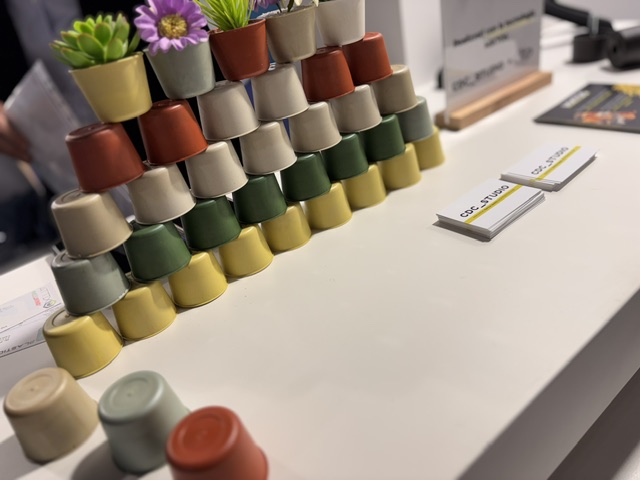
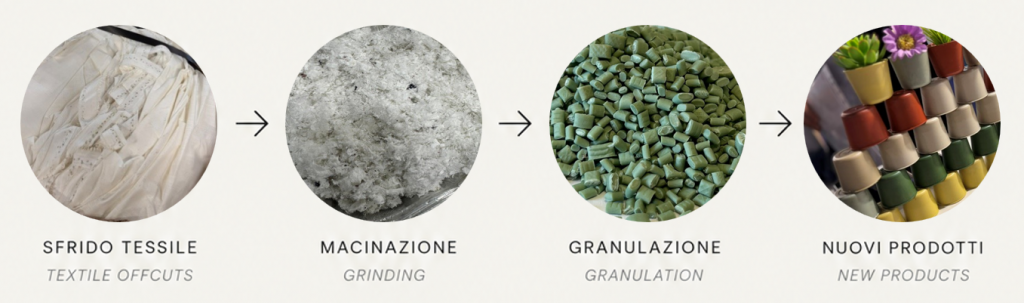
CDC_Studio is a Tuscan company founded to give textile waste a second life. Its MIKTÒS patent tackles exactly the knot that conventional recycling cannot untie: mixed composition. The process turns production offcuts into a polymer compound comparable to recycled plastic, which can be processed on existing industrial machinery and is itself recyclable. The model is simple and circular: companies hand over their production waste, and the material returns to circulation as granules ready for new products. Since 2026, almost 50 Ton of our offcuts has followed this route. They do not become fabric again, but they do become material again: objects, components and applications for design, furniture and construction.
By-product, not waste: the difference that matters
What changes for those who specify, distribute and install

For architectural practices and contract projects, circularity is increasingly a specification requirement: Italy’s CAM criteria, the DNSH principle and the EU Taxonomy ask for evidence, not claims. A documented end of life for production waste becomes part of the environmental story of the product you specify. For distributors and retailers, it means answering clients’ growing questions on supply-chain sustainability with concrete data. For installers and fabricators, it is a first step towards a question that will soon come from the site as well: what happens to the make-up trims? We do not have all the answers yet. But we have chosen to look for them in a measurable way, with partners who share the same rigour.
Circularity is not announced; it is documented. That is why we have gathered the project data, the regulatory framework and the first results of our work with CDC_Studio into a single dossier.